DTF vs Sublimation for All-Over Prints: Which Is Better?
If you want a bold, full-colour design that covers a large part of a garment, two printing methods you’ll often come across are DTF and sublimation.
Both can produce detailed, vibrant artwork, but they work very differently. More importantly, they aren’t interchangeable. The fabric, design, order size and amount of coverage you want can quickly determine which method makes more sense.
Here’s how DTF and sublimation compare, particularly when you’re considering large or all-over prints.
What Is DTF Printing?
DTF printing stands for direct-to-film printing.
The design is printed onto a special film, coated with adhesive powder, cured and then transferred onto the garment using heat and pressure.
Unlike sublimation, DTF can be applied to a wide range of fabrics, including:
- Cotton
- Polyester
- Cotton/polyester blends
- Hoodies and sweatshirts
- T-shirts
- Workwear and other suitable garments
One of DTF’s biggest advantages is flexibility. You can reproduce detailed, full-colour artwork without needing a separate screen for every colour.
What Is Sublimation Printing?
Sublimation works differently.
The artwork is printed using special sublimation inks and transferred to polyester fabric using heat. Instead of creating a layer on top of the garment, the dye turns into gas under heat and bonds with the polyester fibres.
The result is a print that effectively becomes part of the fabric.
This makes sublimation particularly useful for:
- Polyester sportswear
- Jerseys
- Activewear
- Performance garments
- Large, continuous graphics
- Genuine all-over printed garments
Because the design is embedded into the fibres, there’s no raised print layer sitting on top of the fabric.
DTF vs Sublimation: The Biggest Difference
The biggest difference is where the design ends up.
With DTF, the printed transfer sits on the surface of the garment.
With sublimation, the colour becomes part of the polyester fibres themselves.
This affects everything from how the garment feels to how large the printed area can realistically be.
Which Is Better for All-Over Printing?
If by “all-over print” you mean a design covering virtually the entire garment, sublimation is generally the better option.
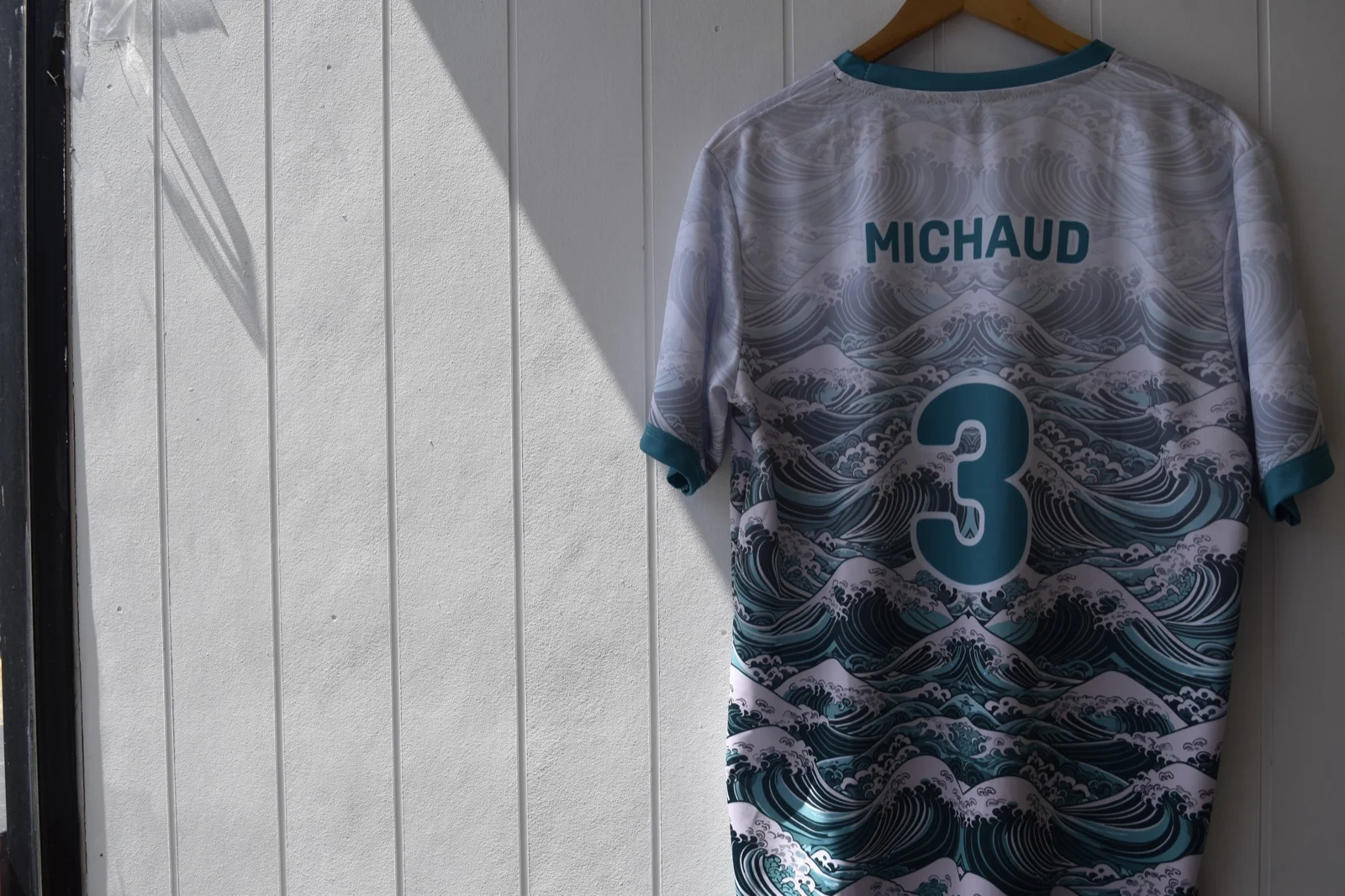
True all-over sublimation is often produced using a cut-and-sew process. The design is printed onto fabric panels before the garment is assembled, allowing artwork to extend across the front, back, sleeves and other areas with fewer restrictions. Because the garments are made to order, sublimated teamwear starts at 10 units and runs 15 to 20 business days rather than the 7 to 10 you would expect from standard decoration, so it is worth building that into your timeline.
This is why sublimation is so common for sports jerseys and highly graphic performance apparel.
DTF is better thought of as a large-format decoration method rather than a true all-over printing process.
You can create large front or back graphics with DTF, but covering an entire garment with one large transfer can create practical issues with feel, flexibility and breathability.
Fabric Compatibility
This is where DTF has a major advantage.
DTF
DTF can work across many commonly used garment fabrics, including cotton, polyester and blends.
That makes it particularly useful when you want a detailed full-colour design but don’t want to be restricted to polyester garments.
Sublimation
Sublimation works best with polyester or polyester-rich materials, usually on white or light-coloured fabric.
The process relies on the dye bonding with polyester fibres, so it doesn’t work on standard cotton garments in the same way.
If you want a large graphic on a black cotton tee, DTF may be suitable. If you want a full-colour design covering an entire polyester sports jersey, sublimation is usually the more appropriate process.
What About Dark Garments?
DTF works well on both light and dark garments.
A white ink layer can be printed underneath the artwork, allowing colours to remain vibrant even on black, navy or other dark fabrics.
Standard sublimation is different because sublimation inks are transparent and there’s no white ink.
For this reason, sublimation is generally used with white or light polyester fabric. If you see a fully sublimated jersey with a black background, the garment will typically have started as white polyester fabric, with the black background incorporated into the printed design before construction.
Print Feel and Breathability
This becomes particularly important with large prints.
Because DTF creates a transfer on the surface of the garment, you can feel the printed area. With smaller designs this usually isn’t an issue, but a very large solid DTF graphic can noticeably change the feel and breathability of the fabric.
Sublimation doesn’t create this surface layer.
The ink bonds with the fibres, so the fabric retains its natural feel and flexibility. This is one reason sublimation is particularly popular for sports and performance garments where breathability matters.
Colour and Detail
Both methods can produce detailed, full-colour artwork.
DTF is particularly good for:
- Detailed logos
- Illustrations
- Multiple colours
- Gradients
- Complex artwork
- Small and medium runs
Sublimation works particularly well for:
- Full-colour patterns
- Gradients
- Photographic artwork
- Large continuous graphics
- Designs extending across multiple garment panels
The right choice depends less on the number of colours and more on the garment material and how much of it you want to decorate.
Which Is More Durable?
Both methods can be highly durable when produced and cared for correctly, but they age differently.
Because sublimation dye becomes part of the polyester fibres, there’s no surface layer to crack or peel. This makes it particularly durable for garments that are washed frequently.
DTF transfers are also designed to withstand regular wear and washing, but because the design sits on the garment surface, excessive heat and incorrect washing can eventually affect the transfer.
Washing inside out, using moderate temperatures and avoiding excessive tumble-dryer heat can help extend the life of DTF-printed garments.
When Should You Choose DTF?
Choose DTF when:
- You’re printing on cotton or cotton blends
- You need to print onto dark garments
- You want detailed, multi-colour artwork
- You need a large front or back graphic rather than complete garment coverage
- You’re producing a smaller run
- You want flexibility across different garment types
For custom tees, hoodies and merchandise, DTF can be an excellent option when the artwork is too detailed for traditional screen printing.
When Should You Choose Sublimation?
Sublimation makes more sense when:
- You want genuine all-over artwork
- You’re producing polyester garments
- You’re creating sports jerseys or performance apparel
- Breathability is important
- Your artwork needs to run across large areas or multiple garment panels
- You don’t want a noticeable print layer on the fabric
So, Which Is Better?
For true all-over printing, sublimation wins. It allows the artwork to become part of the polyester fabric and is particularly well suited to sportswear, jerseys and garments with designs covering almost every available surface.
For large, detailed prints on standard tees, hoodies, cotton garments or dark colours, DTF offers far more flexibility.
The important thing is not to choose a printing method based on artwork alone. Start with the garment, fabric and required coverage, then select the process that works best with those requirements.
Not sure which printing method suits your design? Get in touch with Melbourne Merch and send through your artwork and garment requirements. We can help determine the most suitable printing method before you place your order.