What Is Company Swag and Why Should You Care?
A branded hoodie someone wears every weekend. A tote that becomes their regular shopping bag. A welcome pack waiting on a new employee's desk.
These are all examples of company swag: products customised with a business's branding and given to employees, customers, partners or event attendees.
The idea is straightforward. Put your brand on something useful or desirable, then give people a reason to keep it. Choosing the right product takes more thought than adding a logo to the cheapest item in a catalogue.
What counts as company swag?
Company swag can include clothing, headwear, bags, drinkware, stationery and other branded accessories. You may also hear it called corporate merchandise, promotional merchandise or branded gifts.
The terms overlap, although the purpose can differ. A staff hoodie may be designed to build a sense of belonging, while a giveaway at a trade show might help someone remember your business after a conversation.
Uniforms have a more specific role: they identify staff and support workplace needs. Swag is often more optional, giving people something they can choose to use beyond their job.
Why businesses invest in branded merchandise
Thoughtful merchandise creates a physical connection with a business. That can be useful when much of the relationship happens through emails, meetings and online platforms.
For employees, a well-chosen welcome item can make onboarding feel more personal. For event attendees, something practical can act as a reminder of who they met and what your business offers.
For customers and partners, merchandise can accompany a milestone, launch or thank-you. It works best when the product suits the relationship rather than feeling like an unrelated promotional item.
None of this means every branded product will generate sales. The result depends on the audience, product and reason for giving it.
Choose the audience before the product
Start with who will receive the merchandise and where they will use it.
An office welcome pack might include a comfortable layer and a practical bag. An outdoor team may value different products. Conference attendees travelling with limited luggage are unlikely to appreciate something bulky or difficult to carry.
Our promotional products range provides a starting point, but a shorter list based on audience needs will make selection easier.
Ask whether you would still want the product if the logo belonged to a different company. If the answer is no, reconsider the item or the branding.
Make the branding wearable and useful
A larger logo is not automatically more effective. A subtle chest mark, a considered colour choice or a well-placed graphic may make a garment easier to wear regularly.
The decoration should also suit the item. Embroidery can create a textured finish on suitable polos, caps and heavier garments. Printed artwork may be more appropriate for a large illustration or a detailed campaign design.
Keep useful features in mind. A bag needs practical dimensions, clothing needs a suitable fit, and any product should be chosen with its intended use in mind.
Set a complete budget
Compare the total delivered cost, including decoration, setup, packaging and freight. A low product price can look less attractive once the rest of the order is included.
For clothing, collect sizes before ordering wherever possible. Check the actual size chart rather than assuming everyone takes the same size across brands.
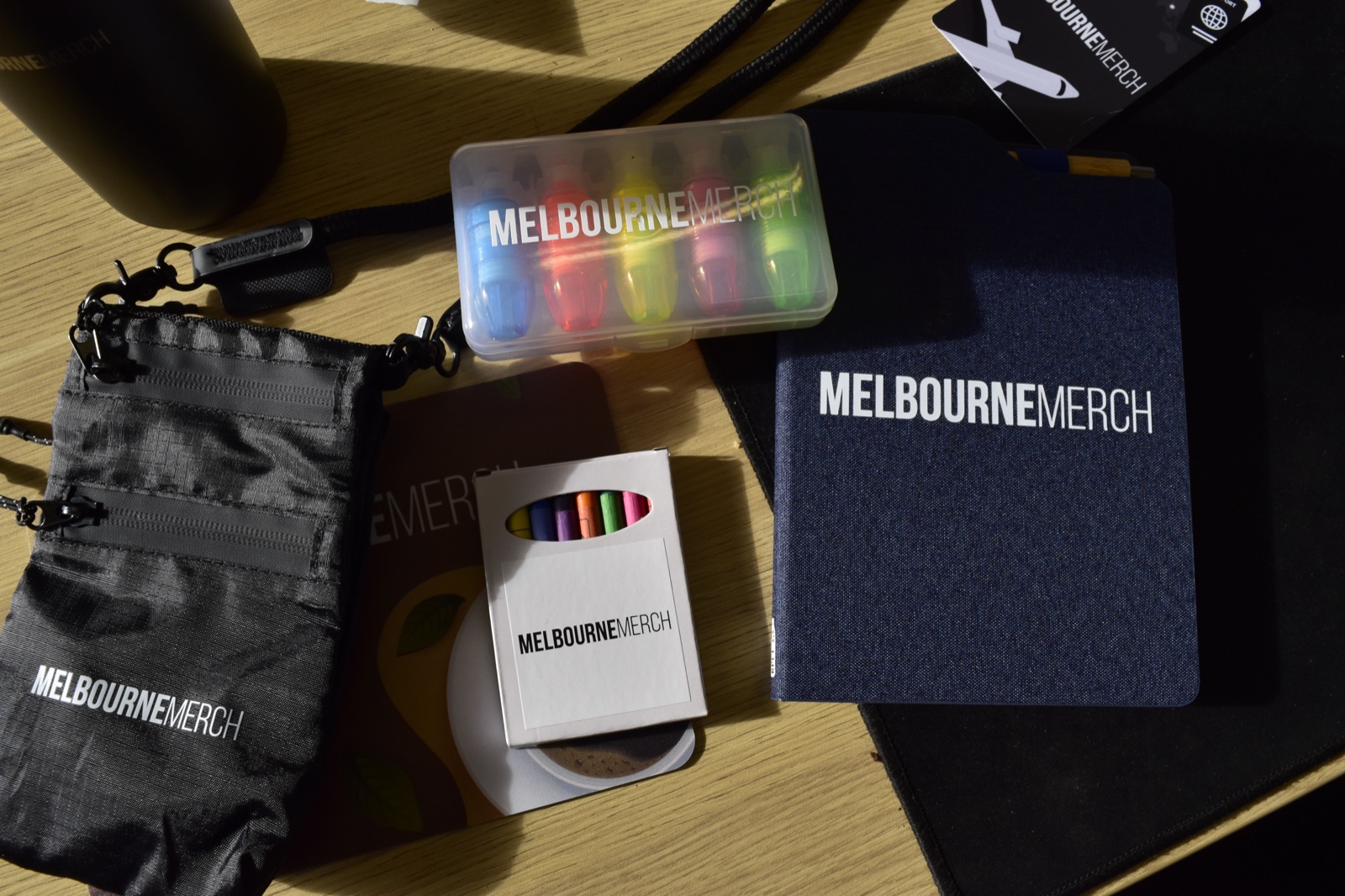
If you are creating a coordinated welcome gift, merchandise bundles and packs can help you think through how items work together. Every item should earn its place; adding more products does not automatically make the gift better.
Plan how you will judge success
Choose a measure that matches the purpose. For employee merchandise, ask about fit, usefulness and what people would choose next time. For an event, track how many items were distributed and whether they supported meaningful conversations.
Avoid treating the number of products handed out as proof of business impact. A smaller, well-targeted order may serve your objective better than a large quantity of generic giveaways.
Create company swag with a clear reason to exist
The strongest company swag starts with a specific audience and a practical purpose. Choose products people want, make the branding feel considered and organise distribution before the boxes arrive.
To plan merchandise for your team, customers or next event, request a company swag quote with your audience, quantities, budget and required date.
Frequently asked questions
What is the difference between company swag and promotional products?
The terms often overlap. Company swag commonly describes branded items for employees, customers and communities, while promotional products can also refer to giveaways used in marketing campaigns. The audience and purpose matter more than the label.
What makes a good company swag item?
A useful product that suits the recipient, has an appropriate level of quality and carries considered branding. For clothing, fit and comfort are as important as the design.
Should every item have a large company logo?
No. Branding should suit the product and how people will use it. A smaller logo or a thoughtful graphic can make an item more appealing for everyday use.